Who Can Manage Subcontractor Payments and CIS?

Published 2 November 2026
Paying subcontractors should be simple. In practice, it can become one of the most time-sensitive admin jobs in a construction business.

Before a subcontractor is paid, you may need to verify them with HMRC, apply the right deduction rate, record the payment correctly, issue a deduction statement, and submit a monthly return. Miss a step, use the wrong rate, or file late, and the problem can quickly become expensive and distracting.
For construction businesses in Kent, Medway, and the surrounding areas, the right support usually comes from a construction-focused accountant or a CIS and payroll bureau. The best fit depends on how many subcontractors you pay, how often you pay them, and whether you want someone to manage the payment process itself or just the compliance side.
Brian Pusser & Co Ltd works with construction and trades businesses across Kent, Medway, and nearby areas, making it a sensible starting point if you want practical help with subcontractor payment admin and Construction Industry Scheme compliance.
The right provider is usually a construction accountant or CIS bureau
A general accountant may be able to help with tax returns, accounts, and bookkeeping. But subcontractor payments in construction have their own rules, timing, and paperwork. That is why a provider with construction experience is often a better choice.
A construction-focused accountant or specialist bureau should understand:
HMRC registration and verification for subcontractors
Deduction rates and payment status
Monthly filing deadlines
Payment and deduction statements
Mixed labour arrangements
The difference between subcontractors, employees, and agency or umbrella labour
What records HMRC may expect to see
This matters because subcontractor admin is rarely just “paying invoices”. A contractor has to decide whether the work falls under scheme rules, check the subcontractor’s tax status, calculate any deductions, and report payments properly.
For example, one subcontractor may be paid gross because HMRC confirms gross payment status. Another may have deductions made at the standard rate. Another may need a higher deduction rate if verification details do not match or HMRC cannot verify them correctly.
A good provider helps you avoid guesswork.

What a CIS service can usually manage
The exact service varies between providers, so it is worth asking what is included before you sign up. Some firms provide a compliance-only service. Others also help with payment schedules, payroll, bookkeeping, and wider accounts support.
A typical service may include the following.
HMRC subcontractor verification
Before paying a new subcontractor, the contractor usually needs to verify them with HMRC. This confirms the deduction rate to apply.
Your provider may ask for details such as:
The subcontractor’s legal name or trading name
Unique Taxpayer Reference
National Insurance number, where relevant
Company registration number, if they trade through a limited company
VAT status, if applicable
Contact and payment details
The type of work carried out
Verification is an area where mistakes can happen easily. A spelling difference, missing reference, or wrong business type can lead to delays or an unexpected deduction rate. A provider used to construction clients can spot these issues sooner.
Deduction calculations
Once the subcontractor is verified, the payment needs to be calculated correctly. Labour is treated differently from certain materials, and VAT must also be handled properly where it applies.
A provider can help calculate:
The gross amount due
Any allowable materials element
The amount subject to deduction
The deduction to withhold
The net amount payable to the subcontractor
This is one of the most useful parts of outsourcing. It gives you a clear payment figure and reduces the chance of overpaying, underpaying, or reporting the wrong amounts.
Monthly returns
Contractors must submit monthly returns to HMRC when they operate within the scheme. These returns show the subcontractors paid and the deductions made during the reporting period.
A provider can prepare and submit the return for you, provided they have the right information in time. They may also remind you of deadlines, check figures against your records, and flag missing subcontractor details before the return is due.
This can be especially helpful for firms with several jobs running at once. Site teams and admin staff may be dealing with invoices, timesheets, materials, variations, and retentions at the same time. A clear monthly process reduces stress.
Payment and deduction statements
Subcontractors need statements showing how their payment was calculated and what deduction was made. These statements help them keep their own records and claim deductions against their tax bill.
A good statement should show the key payment details clearly, including the gross amount, any deduction, and the net amount paid.
Having statements prepared consistently also helps if a subcontractor queries a payment later. Instead of searching through emails or handwritten notes, you have a clear record.
Payment schedules and bank payment support
Some providers go further and help prepare payment batches. Others do not touch the actual movement of money and leave bank payments to the contractor.
This distinction is important.
A provider might:
Prepare a payment schedule for approval
Confirm net amounts payable
Reconcile subcontractor invoices to approved work
Provide a list for your bank payment run
Help check what has been paid and what remains outstanding
But they may not actually process the bank transfer. You should confirm this early, especially if your main problem is not the return itself but the weekly or monthly payment run.
Compliance support and payment processing are not always the same thing
Many construction business owners use the phrase “manage subcontractor payments” to mean one of two things.
The first meaning is compliance. This covers verification, deductions, returns, and statements. The second meaning is payment administration. This covers preparing payment lists, matching invoices, and sometimes arranging the actual payment batch.
These services overlap, but they are not identical.
Compliance support
Focuses on HMRC rules, deduction rates, monthly returns, and statements.
Usually handled by accountants, tax advisers, or bureaus.
Reduces filing and deduction errors.
Payment processing support
Focuses on who gets paid, how much, when, and from which account.
May be handled by bookkeepers, finance staff, payroll teams, or specialist bureaus.
Reduces late payments, duplicate payments, and payment approval confusion.
If you want someone to handle both, ask clearly. At BR Pusser & Co LTD, we cover both. Contact us for a free consultation. Do not assume that a monthly return service includes making payments to subcontractors. Many firms will prepare the figures and records while you retain control of the bank payments.
That can be a good arrangement. You keep control of cash flow, while the specialist handles the rules and calculations.
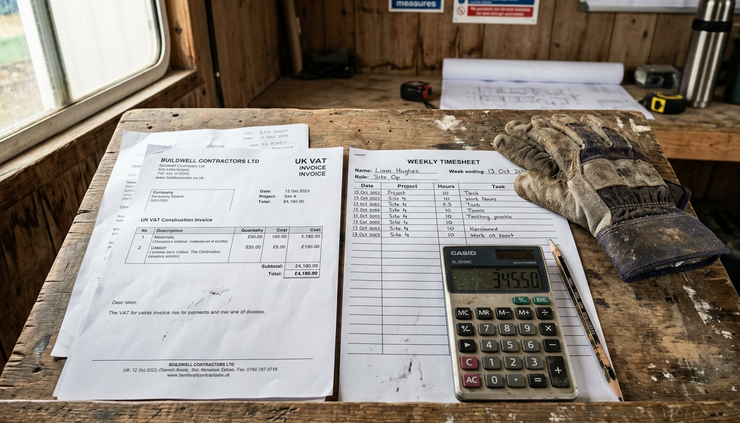
What to ask before choosing a provider in Kent
If you are comparing accountants, payroll bureaus, or bookkeeping firms, use direct questions. The answers will show whether they understand construction payment admin or only offer a basic accounts service.
Do you verify subcontractors with HMRC and submit monthly returns?
This is the most basic question. If the answer is yes, ask how they collect subcontractor details and how quickly they can verify someone new.
For a busy contractor, delays can create awkward payment issues. A subcontractor may be ready for payment, but if the verification is not complete, you may not know which rate to apply.
Can you calculate deductions and issue statements?
Calculations and statements should be part of a proper service. Ask whether they will prepare statements for every relevant payment and how those statements are sent to subcontractors.
You should also ask how they deal with invoices that include both labour and materials. This is a common area for mistakes.
Do you process the actual payments, or do we pay subcontractors ourselves?
This question avoids confusion. If the provider only calculates the net amounts, your team still needs to make the bank payments.
If they can support payment batches, ask how approvals work. It is sensible for the contractor to approve payments before money leaves the account.
Do you support payroll or umbrella arrangements as well?
Construction businesses often use a mix of labour. Some workers are employees. Some are self-employed subcontractors. Some may come through agencies or umbrella arrangements.
A provider that understands payroll as well as subcontractor reporting can help you keep the categories clear. This is useful when your business grows, takes on longer projects, or changes how labour is supplied.
What records and deadlines do you need from us?
Even the best provider cannot work without timely information. Ask what they need each week or month.
This may include:
Subcontractor invoices
Timesheets or approved work records
Materials breakdowns
New subcontractor details
Payment dates
Amounts already paid
Any retentions, contra charges, or adjustments
You should also agree a cut-off date. For example, if the provider needs all records by a certain day each month, make sure your internal process supports that.
Why local construction knowledge helps
A provider does not have to be next door to do the work well. Many accounting and bureau services can be delivered remotely. But local knowledge can help, especially when a firm works regularly with trades and contractors in Kent, Medway, and surrounding areas.
Local construction businesses often deal with a mixture of small domestic jobs, commercial projects, refurbishment work, maintenance contracts, and subcontract labour across several sites. The admin can become messy if every job runs its own process.
A locally experienced provider may be used to the way smaller contractors work in practice. That means they can build a process around real records, not an ideal version of how the paperwork should look.
For example, a small builder may have:
One person approving subcontractor invoices
Another person handling banking
A bookkeeper entering supplier costs
Several site supervisors sending timesheets at different times
Subcontractors who expect quick payment
The right system brings those parts together. It does not need to be complicated. It just needs to be consistent.
When outsourcing makes sense
Some contractors manage everything in-house. That can work if the volume is low and someone understands the rules. But outsourcing often makes sense when the number of subcontractors increases or when deadlines start to feel tight.
It may be time to get help if:
You pay subcontractors every week or month
You are unsure which deduction rate applies
Monthly returns are being prepared late
Subcontractors often ask for missing statements
You are spending too much time checking figures
You have mixed payroll and subcontractor arrangements
You are worried about HMRC errors
Outsourcing does not remove your responsibility as a contractor. You still need to provide accurate information and approve payments. But it can give you a better process and a clearer audit trail.
For many firms, the benefit is peace of mind. The work still gets done, but it no longer relies on rushed checks at the end of the month.
What our CIS service can help you review
Before choosing the right level of support, it helps to map out how subcontractor payments currently work in your business.
Brian Pusser & Co Ltd can help construction and trades businesses think through practical questions such as:
How many subcontractors are paid each month?
Are they paid weekly, fortnightly, or monthly?
Who verifies new subcontractors?
Who calculates deductions?
Who prepares and sends statements?
Who submits the monthly return?
Who makes the bank payments?
What records are kept for each payment?
Are payroll, agency labour, or umbrella arrangements also involved?
This helps identify the service you actually need.
A contractor paying two subcontractors a month may only need basic support with verification and returns. A firm paying twenty subcontractors across several sites may need a fuller process, including payment schedules, record checks, and regular deadline reminders.
The key is to avoid paying for support you do not need, while making sure the risky parts are covered properly.
A simple way to choose the right service level
Use the table below as a guide when deciding what to ask for.
Business situation | Likely support needed |
You use a few regular subcontractors and have tidy records | Verification, deduction checks, monthly returns, and statements |
You regularly take on new subcontractors | New subcontractor setup, HMRC verification, and record checks |
You pay many subcontractors across several sites | Payment schedules, deductions, returns, statements, and deadline management |
You use employees and subcontractors | Payroll support alongside subcontractor compliance |
You want to keep bank payments in-house | Compliance service with clear net payment figures for your team |
You want help preparing payment runs | Payment batch preparation and approval support, if offered |
This is also why an initial conversation is useful. The right provider should ask about your current process before suggesting a service.
Keep control while getting expert help
A good subcontractor payment process should do three things.
It should help subcontractors get paid correctly. It should keep HMRC reporting on track. It should give the contractor clear records in case a figure is queried later.
That does not mean handing over all control. Many businesses prefer to keep final approval and bank payments in-house. The provider handles the calculations, reporting, and paperwork, then the contractor decides when payments are released.
This split often works well because it protects cash flow decisions while reducing admin risk.
If you are based in Kent, Medway, or the surrounding areas and want help with subcontractor payments, start by checking which parts of the process are causing the most pressure. Is it verification? Monthly returns? Statements? Payment schedules? Mixed payroll and subcontractor arrangements?
Once that is clear, the next step is simple.
Contact Brian Pusser & Co Ltd to discuss your current subcontractor payment process and check which CIS service best fits your construction business. Share roughly how many subcontractors you pay each month, how often you pay them, and whether you need payment processing support as well as return preparation.
The right support will not make construction admin disappear, but it can make it much easier to manage, month after month.

